

In manufacturing, crafts, and modern industry, precision cutting tools play a vital role in shaping materials efficiently and cleanly. Among these, ultrasonic cutters have become increasingly popular for their ability to deliver smooth, accurate cuts without the drawbacks of traditional blades. But what exactly are ultrasonic cutters, and what are they used for? Let’s explore how they work, their key applications, and why they’re so valuable across multiple industries.
What Is an Ultrasonic Cutter?
An ultrasonic cutter is a high-frequency cutting tool that uses ultrasonic vibrations—typically between 20,000 and 40,000 hertz—to move a blade or cutting edge at extremely high speeds. These rapid vibrations reduce friction between the blade and the material, allowing the cutter to glide smoothly with minimal resistance.
In simple terms, instead of relying on brute force to slice through materials, ultrasonic cutters use vibration energy to make precise cuts. This not only makes cutting faster and easier but also produces cleaner edges, reduces material deformation, and minimizes debris.
Most ultrasonic cutters consist of three main components:
-
Generator – converts electrical energy into high-frequency signals.
-
Transducer – converts those signals into mechanical vibrations.
-
Blade or horn – transfers the vibration to the material being cut.
How Ultrasonic Cutting Works
When the ultrasonic cutter’s blade vibrates thousands of times per second, it creates microscopic friction that softens or melts the material at the contact point. This allows the blade to move through even tough materials with minimal pressure. Because there’s less physical resistance, the cutting process produces very little heat and distortion.
This technique is especially beneficial for cutting soft, flexible, or delicate materials, where conventional blades might tear, crush, or fray the edges. It also reduces operator fatigue, since very little force is needed to achieve clean cuts.
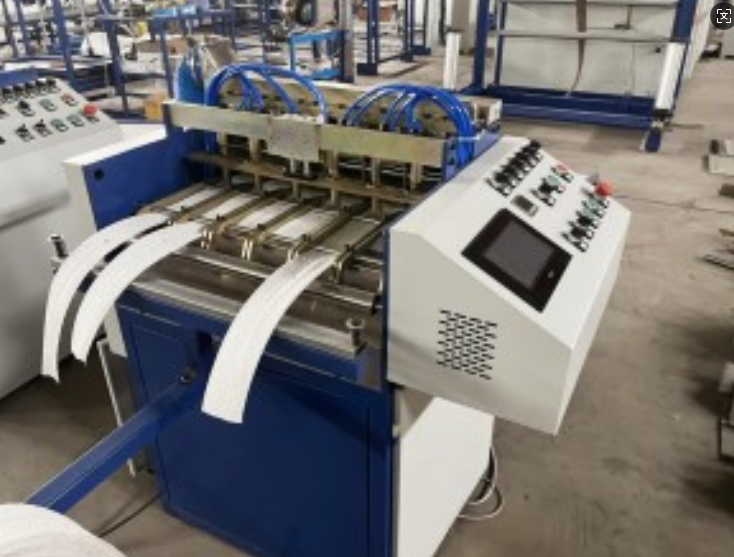
Common Uses of Ultrasonic Cutters
Ultrasonic cutters are used in a wide range of industries due to their versatility and precision. Here are some of the most common applications:
1. Plastics and Polymers
Ultrasonic cutters are widely used in the plastic manufacturing and packaging industries. They can cut through thermoplastics, films, and composites with ease. Because the blade vibrates at such a high frequency, it can melt and seal the edges simultaneously, reducing the need for additional finishing processes.
2. Rubber and Foam
Traditional blades often struggle with soft, elastic materials like rubber and foam. Ultrasonic cutters, however, make smooth and accurate cuts without pulling or stretching. This makes them ideal for automotive parts, gaskets, seals, and insulating foam production.
3. Textiles and Fabrics
In the textile and garment industry, ultrasonic cutters are used to trim synthetic fabrics, nonwoven textiles, and laminates. The high-frequency vibration seals the fabric edges as it cuts, preventing fraying. This is especially useful for materials like polyester, nylon, and microfiber, which can otherwise unravel easily.
4. Composite Materials
Modern manufacturing often uses composites such as carbon fiber-reinforced plastics (CFRP) or fiberglass. These materials are difficult to cut cleanly with conventional tools because they can chip or delaminate. Ultrasonic cutters provide a precise, burr-free edge, making them essential for aerospace, automotive, and sporting goods applications.
5. Food Industry
Yes—ultrasonic cutters are even used for food slicing. Because they produce very little friction or residue, they can slice through sticky or soft foods like cheese, cakes, and pastries cleanly. This keeps products looking neat and hygienic, while minimizing waste.
6. Crafts and Model Making
Hobbyists and artists appreciate ultrasonic cutters for precision tasks such as cutting acrylic sheets, foam boards, or resin models. These tools allow for fine, detailed work that would be difficult to achieve with standard utility knives.
Advantages of Ultrasonic Cutters
The popularity of ultrasonic cutters comes from their unique advantages:
-
Precision and clean cuts: Ideal for intricate designs and delicate materials.
-
Low cutting force: Reduces operator fatigue and tool wear.
-
Minimal heat and deformation: Prevents melting or distortion of materials.
-
Quiet and efficient: Less noise and mess compared to rotary tools or saws.
-
Versatile: Can handle a broad range of materials—from plastics to food.
These benefits make ultrasonic cutters not only effective but also cost-efficient in long-term industrial and creative applications.
Final Thoughts
So, what are ultrasonic cutters used for? In essence, they’re precision tools designed to cut materials cleanly and efficiently through ultrasonic vibration. From plastics, composites, and textiles to food and crafts, their versatility makes them indispensable in modern production environments.
Whether in a high-tech factory or a small creative workshop, ultrasonic cutters help achieve a perfect balance between speed, safety, and accuracy—delivering smooth, flawless results that traditional cutting tools simply can’t match.
Post time: Nov-13-2025