

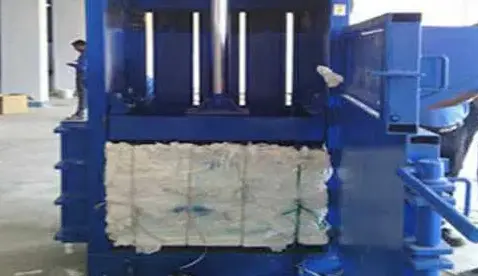
A hydraulic baling press machine is an industrial device used to compress loose materials into compact, dense bales for easier storage, handling, and transportation. It is widely used in recycling, manufacturing, logistics, and waste management industries to process materials such as cardboard, plastic, paper, textiles, and metal scrap. By significantly reducing volume, this machine helps improve efficiency, lower transportation costs, and support environmentally responsible waste management.
How Does a Hydraulic Baling Press Machine Work?
A hydraulic baling press machine operates using a hydraulic system that generates high pressure. The process typically involves the following steps:
- Utaina: Loose materials are placed into a compression chamber.
- Compression: A hydraulic ram, powered by pressurized fluid, pushes down on the materials, compressing them into a dense mass.
- Binding: Once compressed, the material is tied or strapped using wire, plastic bands, or rope to maintain its shape.
- Faafoe: The finished bale is released from the chamber for storage or transport.
Hydraulic systems are preferred because they provide consistent force, precise control, and reliable performance even under heavy loads.
Types of Hydraulic Baling Press Machines
Hydraulic baling machines are available in several configurations, depending on the scale of operation and material type:
1. Vertical Baling Press
Vertical balers are compact machines where materials are loaded from the top. They are ideal for small businesses, retail stores, and warehouses handling moderate amounts of waste like cardboard and plastic film.
2. Horizontal Baling Press
Horizontal balers are larger and designed for high-volume operations. Materials are fed from the side or through conveyor systems. These machines are commonly used in recycling centers and large manufacturing facilities.
3. Automatic Baling Press
Automatic balers feature integrated feeding systems and programmable controls for continuous operation. They improve productivity and reduce manual labor, making them suitable for industrial-scale processing.
4. Metal Baling Press
These heavy-duty machines are specifically designed to compress metal scrap such as aluminum cans, steel, and industrial waste. They require higher pressure capacity and stronger structural components.
Key Applications
Hydraulic baling press machines are used across multiple industries, including:
- Recycling centers: Compacting paper, plastic, and cardboard
- Warehouses and logistics hubs: Managing packaging waste
- Manufacturing plants: Handling production scrap
- Textile industry: Compressing fabric waste or used clothing
- Faatoaga: Baling crop residues and fibers
Their versatility makes them an essential part of modern material handling systems.
Advantages of Using a Hydraulic Baling Press Machine
Using a hydraulic baling press machine offers several practical benefits:
1. Avanoa avanoa
Compressed bales occupy significantly less space than loose materials, improving storage efficiency.
2. Reduced Transportation Costs
Dense bales are easier and cheaper to transport compared to uncompressed waste.
3. Improved Workplace Safety
Organized, compacted materials reduce clutter and potential hazards.
4. Environmental Benefits
Encourages recycling and reduces landfill waste, supporting sustainability goals.
5. Increased Material Value
Recyclable materials are often more valuable when compacted into uniform bales.
Factors to Consider When Choosing a Machine
When selecting a hydraulic baling press machine, consider:
- Compression force (measured in tons)
- Chamber size and bale dimensions
- Type and volume of materials
- Level of automation required
- Available space for installation
Choosing the right machine ensures optimal efficiency and return on investment.
Faaiuga
A hydraulic baling press machine is a powerful and efficient solution for compressing and managing bulk materials. By transforming loose waste into compact bales, it helps businesses save space, reduce costs, and improve sustainability. Whether used in small facilities or large industrial operations, this machine plays a vital role in modern recycling and waste management systems.
Post time: Mar-21-2026